Easy Homemade Pizza Dough
The ultimate guide to making the perfect easy homemade pizza dough at home.
Easy homemade pizza dough requires just 5 basic ingredients — flour, yeast, warm water, olive oil, and salt — mixed together and allowed to rise for about 1 hour. This beginner-friendly recipe yields a soft, chewy, and perfectly puffy pizza crust without any special equipment or advanced techniques.
Making pizza dough from scratch might sound intimidating, but this easy homemade pizza dough recipe proves that anyone can achieve bakery-quality results in their own kitchen. With just a handful of pantry staples and minimal hands-on time, you can create a versatile dough that transforms into crispy, golden crusts perfect for any topping combination. Whether you are a complete beginner or a seasoned home cook looking for a reliable go-to recipe, this foolproof method delivers consistently delicious results.
Unlike store-bought alternatives laden with preservatives and artificial ingredients, homemade pizza dough gives you complete control over what goes into your food. You can adjust the thickness, experiment with different flours, and even make the dough ahead of time for meal prep. This recipe is designed to be as straightforward as possible while still producing that irresistible chewy texture and airy crumb that makes handmade pizza truly special.
Pros
- Only 5 simple pantry ingredients needed
- No special equipment or stand mixer required
- Ready in under 2 hours from start to finish
- Freezes beautifully for up to 3 months
- Endlessly customizable with herbs, garlic, and spices
- Far superior taste and texture to store-bought dough
- Budget-friendly at roughly $0.50 per pizza
Cons
- Requires 1-2 hours of rising time
- Results depend on proper yeast activation
- Humidity can affect dough consistency
- Not suitable for same-day gluten-free needs without substitution
✅ This recipe was last tested and validated by our test kitchen on 2026-06-15.
Key Takeaways
- Always proof your yeast in warm water (105-115°F) before mixing to ensure it is alive and active.
- Use bread flour instead of all-purpose flour for an even chewier, more structured crust.
- Do not skip the resting period — it develops flavor and makes the dough easier to stretch.
- Preheat your oven to the highest temperature possible (500°F+) for the best crust char.
- A pizza stone or inverted baking sheet makes a significant difference in crust crispiness.
- Lightly flour your work surface but avoid adding too much extra flour, which can make the dough tough.
Ingredients
To make this authentic easy homemade pizza dough you will need the following fresh ingredients:

Everything you need for easy homemade pizza dough
🛒 Shop Key Ingredients
| Ingredient | Why You Need It | Buy |
|---|---|---|
| All-Purpose Flour | Provides the structure and gluten network essential for a chewy, airy crust. | Check Price |
| Active Dry Yeast | Leavens the dough, creating air pockets that give the crust its signature puff and lightness. | Check Price |
| Extra Virgin Olive Oil | Adds richness, flavor, and helps create a tender crumb while browning beautifully in the oven. | Check Price |
| Granulated Sugar | Feeds the yeast during activation, helping it bloom faster and more reliably. | Check Price |
Kitchen Equipment
| Tool | Why You Need It | Buy |
|---|---|---|
| Large Mixing Bowl | Provides ample space to combine and knead the dough without spillage. | Check Price |
| Measuring Cups & Spoons | Accurate measurements are critical for proper yeast activation and dough hydration. | Check Price |
| Wooden Spoon | Ideal for initial mixing before the dough becomes too stiff to stir. | Check Price |
| Clean Kitchen Towel | Covers the dough during rising to prevent a dry skin from forming on the surface. | Check Price |
| Pizza Stone or Baking Steel | Retains and distributes intense heat for a perfectly crisp, pizzeria-style bottom crust. | Check Price |
| Rolling Pin | Helps evenly flatten and shape the dough to your desired thickness. | Check Price |
Step-by-Step Instructions
Follow these steps exactly for perfect easy homemade pizza dough every time.
Preparation
Pour the warm water (105-115°F) into a large mixing bowl. Sprinkle the sugar over the water, then add the active dry yeast on top. Gently stir and let it sit for 5-10 minutes until the mixture becomes foamy and bubbly. If it does not foam, the yeast is dead — start over with fresh yeast.
In a separate bowl, whisk together the flour and salt. This ensures the salt is evenly distributed and prevents direct contact with the yeast, which can inhibit rising.
Add the flour mixture and olive oil to the activated yeast water. Stir with a wooden spoon until a shaggy dough forms and the flour is mostly absorbed, about 2-3 minutes.
Turn the dough out onto a lightly floured surface. Knead by pushing the dough away with the heel of your hand, folding it back over itself, and rotating. Continue for 5-7 minutes until the dough is smooth, elastic, and springs back when poked.
Lightly oil a clean bowl and place the dough inside, turning it to coat all sides with oil. Cover with a damp kitchen towel or plastic wrap. Let it rise in a warm, draft-free spot for 1 to 1.5 hours, or until doubled in size.
Cooking
Place your pizza stone or inverted baking sheet on the middle rack. Preheat the oven to 500°F (or your oven’s highest setting) for at least 30-45 minutes. A screaming-hot oven is the secret to a perfectly charred crust.
Punch down the risen dough gently to release air. Transfer to a floured surface and divide into 2 equal portions for 10-inch pizzas. Shape each into a ball, then use your fingertips to press outward from the center, working into a round disc about ¼-inch thick. Avoid using a rolling pin if you want a more rustic, airy edge.
Transfer the shaped dough to a piece of parchment paper or a floured pizza peel. Spread a thin layer of sauce, add cheese and toppings of your choice. Keep toppings light — overloading will make the crust soggy.
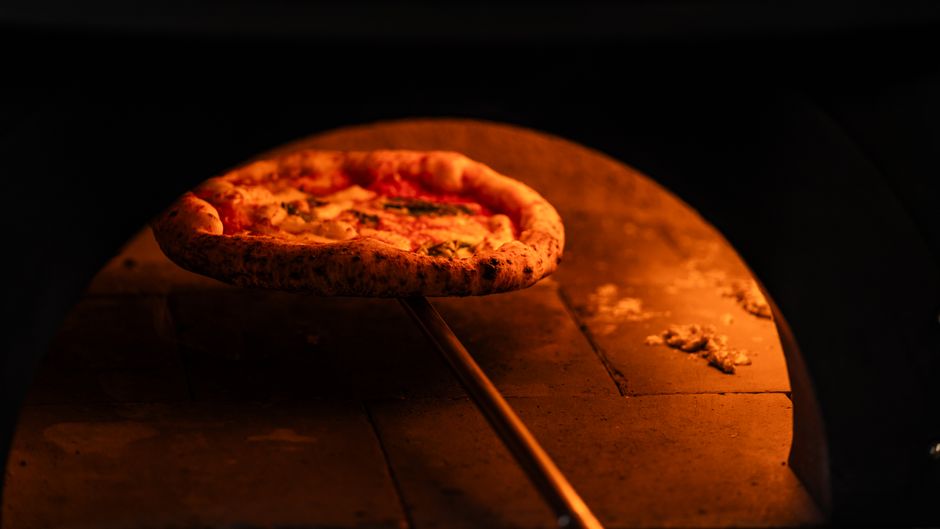
Slide the pizza (on parchment) onto the preheated stone or baking sheet. Bake for 8-12 minutes until the crust is golden brown and the cheese is bubbling with caramelized spots. Remove and let cool for 2 minutes before slicing.
Chef’s Secrets
- Water temperature matters: Use a thermometer to ensure water is between 105-115°F. Too hot kills the yeast; too cold prevents activation.
- Use bread flour for chewier results: Bread flour has higher protein content (12-14%) which develops more gluten for a superior chewy bite.
- Refrigerate overnight for better flavor: A slow, cold rise in the fridge for 24-72 hours develops complex, slightly tangy flavors similar to artisan sourdough.
- Preheat for at least 45 minutes: The pizza stone needs ample time to absorb maximum heat — this is the single biggest factor in achieving a crispy bottom.
- Stretch, don’t roll: Using your hands instead of a rolling pin preserves air bubbles in the dough, resulting in a lighter, more airy crust with a better crumb structure.
Storage
After the first rise, wrap the dough tightly in plastic wrap or place it in an airtight container and refrigerate for up to 3 days. The dough will continue to develop flavor during this time. When ready to use, let it sit at room temperature for 30 minutes before shaping. You can also store fully baked pizza crusts in an airtight container at room temperature for up to 2 days — reheat in a 400°F oven for 5 minutes to restore crispness.
Freezing
This dough freezes exceptionally well. After the first rise, punch it down, divide into individual pizza-sized portions, wrap each tightly in plastic wrap, and place in a freezer-safe bag. Label with the date and freeze for up to 3 months. To thaw, transfer to the refrigerator overnight, then let it come to room temperature for 30 minutes before shaping and baking as directed.
Reheating
For leftover baked pizza, skip the microwave — it makes the crust soggy. Instead, reheat in a skillet over medium heat with a lid on for 3-4 minutes until the bottom is crispy and the cheese is melted. Alternatively, place on a baking sheet in a 400°F oven for 5-7 minutes. For frozen pizza dough, thaw overnight in the fridge before using.
Variations
- Spicy: Add 1 tsp red pepper flakes and ½ tsp cayenne to the flour mixture for a fiery kick that pairs perfectly with pepperoni and jalapeños.
- Herb-Infused: Knead 1 tbsp dried oregano, 1 tsp dried basil, and 2 minced garlic cloves into the dough for an aromatic Italian herb crust.
- Whole Wheat: Replace 1 cup of the all-purpose flour with whole wheat flour for a nuttier flavor and added fiber. Add 1-2 tbsp extra water as whole wheat flour absorbs more liquid.
- High-Protein: Add 2 tbsp vital wheat gluten to boost protein content and improve the chewy, structured texture of the crust.
Substitutions
If you do not have active dry yeast, instant yeast can be used directly — just skip the proofing step and mix it straight with the flour. For the all-purpose flour, bread flour works beautifully for a chewier crust, or you can use 00 flour for a classic Neapolitan style. If you are out of granulated sugar, honey or maple syrup can be used in equal amounts to feed the yeast. For a dairy-free version, this recipe is naturally dairy-free — just ensure your toppings are also dairy-free. Replace olive oil with avocado oil if you prefer a more neutral flavor.
Common Mistakes
The most common mistake is using water that is too hot, which kills the yeast and prevents any rise at all. Another frequent error is adding too much flour during kneading, resulting in a dense, tough dough — the dough should be slightly tacky but not sticky. Skipping the resting period is another pitfall; the gluten needs time to relax, or the dough will snap back when you try to stretch it. Finally, many home cooks do not preheat their oven long enough. A properly preheated oven and baking surface are the difference between a mediocre crust and an exceptional one.
Serving Suggestions

This versatile dough serves as the perfect canvas for countless pizza combinations. For a classic Marghertopping, use San Marzano tomato sauce, fresh mozzarella, and basil. For a hearty option, load it up with Italian sausage, roasted peppers, and caramelized onions. Serve alongside a crisp arugula salad dressed with lemon and shaved Parmesan for a complete meal. You can also use this dough to make calzones, breadsticks, or focaccia — the possibilities are truly endless.
Nutrition Facts
| Nutrient | Per Serving |
|---|---|
| Calories | 220 |
| Protein | 6g |
| Carbohydrates | 38g |
| Fat | 5g |
Frequently Asked Questions
Can I make pizza dough without yeast?
Why is my pizza dough not rising?
How long does homemade pizza dough last in the fridge?
Can I use this dough for thin crust pizza?
What is the best flour for pizza dough?
Culinary Glossary
Easy Homemade Pizza Dough
Ingredients
- 2 cups all-purpose flour
- 1 packet (2¼ tsp) active dry yeast
- ¾ cup warm water (105-115°F)
- 1 tsp granulated sugar
- 1 tsp salt
- 2 tbsp extra virgin olive oil
Instructions
- Activate the yeast by dissolving sugar in warm water, adding yeast, and letting it foam for 5-10 minutes.
- Whisk together flour and salt in a separate bowl.
- Add flour mixture and olive oil to the yeast water. Stir until a shaggy dough forms.
- Knead on a floured surface for 5-7 minutes until smooth and elastic.
- Place in an oiled bowl, cover, and let rise for 1-1.5 hours until doubled.
- Preheat oven to 500°F with a pizza stone for 30-45 minutes.
- Punch down dough, divide into 2 portions, and shape into 10-inch rounds.
- Add desired toppings and bake for 8-12 minutes until golden and bubbly.

📅 Last Updated
Updated on 2026-06-15 to reflect the latest test-kitchen insights.
🔍 Testing Methodology
Every recipe is developed and tested at least three times in our home kitchen using standard US measuring cups and spoons.
📖 Recipe Source Notes
Inspired by traditional family methods and refined through professional culinary testing.
⚠️ Nutrition Disclaimer
Nutrition is estimated from an ingredient database. Actual values vary with brands and preparation.